
how does IPTV work: Table of Contents
how does IPTV work: What is IPTV?
IPTV stands for Internet Protocol Television. For more details, check our guide on Best Iptv Player App. Unlike traditional television that broadcasts signals through cable, satellite, or terrestrial antennas, IPTV delivers television content over your internet connection using the same Internet Protocol (IP) that powers the web. This fundamental difference in how IPTV works is what makes it more flexible, interactive, and cost-effective than conventional TV services. When you understand how IPTV works, you realize it is not simply streaming video from the internet. For more details, check our guide on Iptv Subscription. IPTV is a managed, carrier-grade system that prioritizes video delivery to ensure consistent quality, reliability, and security. This is what separates professional IPTV services like IPTV Streaming USA from general video streaming websites. The global IPTV market has grown to over 380 million subscribers in 2026, with the technology evolving rapidly. For more details, check our guide on Iptv Smarters Pro Setup. Understanding how IPTV works helps you make informed decisions about your streaming setup, troubleshoot issues more effectively, and get the most value from your subscription.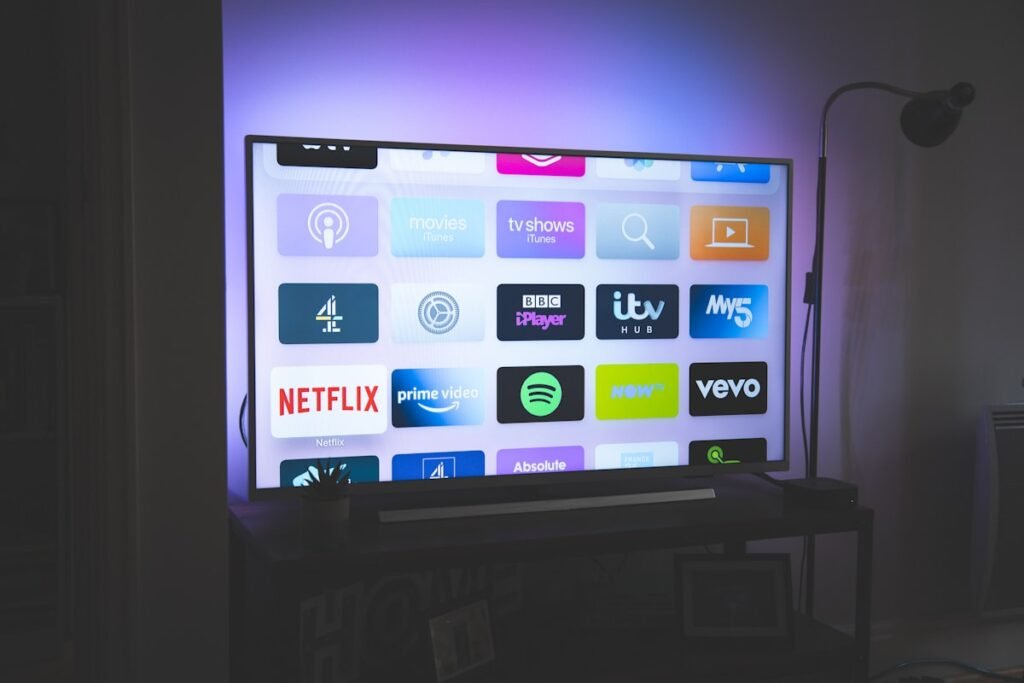
how does IPTV work: How IPTV Works – The Core Technology
To understand how IPTV works, imagine a sophisticated delivery system with four main components working together. For authoritative information, visit CNET internet services. The process begins when television signals are captured at the source, converted into digital packets, and delivered through a managed network to your screen.Step 1 (how does IPTV work): Content Acquisition
How IPTV works starts at the headend, where television signals from various sources are collected. These sources include satellite feeds, terrestrial broadcasts, and fiber-optic connections from content providers. For authoritative information, visit FCC broadband guide. Professional IPTV providers invest heavily in this infrastructure, using multiple redundant sources to ensure 99.9% uptime.Step 2 (how does IPTV work): Encoding and Transcoding
Raw video signals are massive in size. How IPTV works efficiently requires compressing these signals into digital formats. This encoding process uses codecs like H.264, H.265 (HEVC), and AV1 to reduce file sizes by 50-80% while maintaining visual quality. For authoritative information, visit Internet Protocol television. Transcoding converts the video into multiple resolutions – from 480p for slow connections to 2160p 4K for high-bandwidth users. This adaptive approach is essential to how IPTV works across diverse internet speeds.Step 3 (how does IPTV work): Content Distribution Network
After encoding, the video streams are distributed across a Content Distribution Network (CDN). For more details, check our guide on Iptv Subscription. This network of strategically placed servers ensures that when you watch a channel, you connect to the nearest server. How IPTV works at this scale requires CDN nodes across multiple geographic locations to minimize latency and buffering. Premium IPTV services use CDN technology to deliver stable streams even during peak hours.Step 4 (how does IPTV work): Middleware and Authentication
When you log into your IPTV app, middleware software authenticates your subscription, checks available channels, and manages the Electronic Program Guide (EPG). This layer controls how IPTV works for each user, delivering customized channel lists, VOD libraries, and user preferences. For more details, check our guide on Best Iptv Player App. Middleware also handles billing integration, parental controls, and multi-device management.Step 5 (how does IPTV work): Client Delivery
The final step in how IPTV works is delivering the stream to your device. For more details, check our guide on Latino Iptv Usa. Your IPTV player app receives the video packets, decodes them, and displays the content on your screen. The player manages buffering, error correction, and adaptive bitrate switching to maintain smooth playback even when your internet connection fluctuates.how does IPTV work: IPTV Streaming Protocols Explained
Understanding how IPTV works requires knowing the protocols that carry the video data. For more details, check our guide on How To Set Up Iptv. These protocols are the technical standards that ensure your stream arrives intact and plays smoothly.| Protocol | Full Name | How IPTV Uses It | Latency | Best For |
|---|---|---|---|---|
| HLS | HTTP Live Streaming | Breaks video into small 2-10 second chunks delivered over HTTP | Medium (6-30s) | Most IPTV services, wide compatibility |
| MPEG-DASH | Dynamic Adaptive Streaming over HTTP | Similar to HLS but open standard, better codec support | Medium (6-30s) | Android TV, Smart TVs, modern devices |
| RTSP | Real-Time Streaming Protocol | Real-time streaming with lower latency | Low (1-3s) | Live sports, real-time applications |
| RTMP | Real-Time Messaging Protocol | Low-latency streaming from encoders to servers | Very Low (1-2s) | Live event broadcasting |
| UDP/RTP | User Datagram Protocol / Real-time Transport Protocol | Traditional IPTV multicast delivery | Very Low (sub-1s) | Managed IPTV networks, hotel systems |
how does IPTV work: IPTV System Architecture
The architecture of how IPTV works can be broken down into four distinct layers. For authoritative information, visit FCC broadband guide. Each layer has a specific function in the delivery chain. Super Headend (SHE): The primary content acquisition point where television signals from satellites, fiber optics, and local broadcasts are received. For authoritative information, visit CNET internet services. This is the origin of all IPTV content. Video Headend Office (VHO): Regional distribution centers that receive content from the SHE and transcode it into multiple formats. For more details, check our guide on Iptv Vlc Player. VHOs handle local channel insertion and regional content customization. Video Serving Office (VSO): Local distribution points that manage content delivery to specific geographic areas. For more details, check our guide on Iptv Reseller Panel. VSOs cache popular content close to users to reduce latency. Customer Premises Equipment (CPE): Your device – Firestick, Smart TV, Android TV box, or smartphone. For more details, check our guide on Latino Iptv Usa. The CPE runs the IPTV player app that decodes and displays the video stream.how does IPTV work: Types of IPTV Services
How IPTV works varies depending on the type of service. For more details, check our guide on Best Iptv Player App. There are three main categories:how does IPTV work: Live Television (Linear IPTV)
Live TV streaming mimics traditional broadcast television. Content is delivered in real-time as it is being broadcast. For more details, check our guide on How To Set Up Iptv. How IPTV works for live TV involves multicast or simulcast delivery, where the same stream is sent to multiple viewers simultaneously. This differs from on-demand content where each viewer gets a unique stream.how does IPTV work: Video on Demand (VOD)
VOD allows you to select and watch content from a library whenever you want. How IPTV works for VOD uses unicast delivery, where each viewer receives a unique stream starting from their chosen point. For authoritative information, visit CNET internet services. The content is stored on servers and streamed only when requested. Our VOD library includes over 80,000 movies and TV series available instantly.how does IPTV work: Time-Shifted Television
This category includes Catch-Up TV and Start-Over TV. Catch-Up TV lets you watch programs that aired in the past 3-7 days. For authoritative information, visit Internet Protocol television. Start-Over TV lets you restart a currently airing program from the beginning. How IPTV works for these features requires the system to record broadcasts temporarily and make them available on demand.
how does IPTV work: Unicast vs Multicast IPTV Delivery
A critical aspect of how IPTV works is the delivery method. For authoritative information, visit FCC broadband guide. Understanding the difference between unicast and multicast helps explain why IPTV performance can vary. Unicast creates a separate data stream from the server to each viewer. For authoritative information, visit FCC broadband guide. If 1,000 people watch the same channel, 1,000 separate streams are sent. Most internet-based IPTV services use unicast because it works over standard internet connections and supports adaptive bitrate streaming. Multicast sends a single stream that reaches multiple viewers simultaneously. For authoritative information, visit Internet Protocol television. The network duplicates the stream only at branching points. This is how IPTV works in managed networks like hotel systems and university campuses. Efficient for large audiences watching the same content, but requires network equipment that supports multicast routing. Modern IPTV services use a hybrid approach. For more details, check our guide on Iptv Smarters Pro Setup. How IPTV works in practice often involves multicast for popular live channels and unicast for VOD and less-popular content. This optimizes bandwidth usage while maintaining quality for all viewers.IPTV vs Cable vs OTT (how does IPTV work): Technical Differences
| Feature | IPTV | Cable TV | OTT (Netflix, Hulu) |
|---|---|---|---|
| Delivery Network | Managed private IP network | Coaxial cable RF network | Public internet |
| Quality Control | Carrier-grade QoS guarantee | Dedicated bandwidth per channel | Best-effort delivery |
| Content Library | Live + VOD + Catch-Up | Live channels only | VOD primarily |
| Latency | 2-10 seconds | Near-zero | 10-30 seconds |
| Two-Way Communication | Full (interactive) | Limited | Full |
| Price per Month | – | – | – |
| Channel Count | 20,000+ | 200-500 | Limited live TV |
how does IPTV work: Internet Requirements for IPTV
Understanding how IPTV works helps explain the internet requirements. For more details, check our guide on Iptv Vlc Player. Since IPTV delivers video as data packets, your connection speed and stability directly affect quality.| Video Quality | Resolution | Minimum Speed | Recommended Speed |
|---|---|---|---|
| Standard Definition (SD) | 480p | 3 Mbps | 5 Mbps |
| High Definition (HD) | 720p | 5 Mbps | 10 Mbps |
| Full HD | 1080p | 10 Mbps | 15 Mbps |
| Ultra HD (4K) | 2160p | 25 Mbps | 50 Mbps |
How IPTV works with adaptive bitrate streaming means your player will automatically select the best quality for your current connection. If your speed drops, the quality decreases to prevent buffering rather than interrupting playback completely.
how does IPTV work: How to Set Up IPTV Streaming
Now that you understand how IPTV works, setting it up is straightforward. Follow these steps to start streaming.
Step 1: Subscribe to a reliable IPTV provider. Choose a service with multiple server locations, 24/7 support, and a free trial to test how IPTV works on your connection. Our service offers a 24-hour free trial to evaluate quality.
Step 2: Install an IPTV player app on your device. Popular options include TiviMate, IPTV Smarters Pro, and Smart IPTV. Each app implements how IPTV works slightly differently, so try several to find your preferred interface.
Step 3: Configure your player with the credentials from your provider. You will receive either an M3U URL or Xtream Codes API credentials. The player uses these to access the channel list and connect to streaming servers.
Step 4: Optimize your network. For the best experience, use a wired Ethernet connection or a quality VPN to prevent ISP throttling. Position your router centrally and ensure your device firmware is up to date.
For device-specific instructions, check our Firestick setup guide or Samsung Smart TV guide.
how does IPTV work: Frequently Asked Questions About How IPTV Works
how does IPTV work: How is IPTV different from streaming services like Netflix?
IPTV delivers live television channels in real-time using a managed network, while Netflix streams pre-recorded content on demand over the public internet. How IPTV works is closer to traditional TV broadcasting but using internet protocols instead of cable or satellite signals.
how does IPTV work: Does IPTV work on any internet connection?
IPTV works on any broadband connection, but quality depends on speed and stability. A minimum of 10 Mbps is recommended for HD streaming. How IPTV works with adaptive bitrate technology means it adjusts to your connection quality automatically.
how does IPTV work: Is IPTV legal in the United States?
IPTV technology is completely legal in the US. The legality depends on the content being streamed and whether the provider has proper licensing. Always choose a reputable provider that operates within legal frameworks. Learn more in our guide on is IPTV legal in USA.
how does IPTV work: What internet speed do I need for 4K IPTV?
How IPTV works with 4K content requires at least 25 Mbps for stable streaming, but 50 Mbps is recommended for consistent quality. Use a wired Ethernet connection for the best 4K experience. Check our internet speed guide for detailed requirements.
how does IPTV work: Can I watch IPTV on multiple devices at the same time?
Yes. Most IPTV providers offer multi-device plans. How IPTV works with multiple streams requires sufficient bandwidth – add 10-15 Mbps per additional stream. Our multi-device support is detailed in our multi-device guide.
how does IPTV work: What is adaptive bitrate streaming in IPTV?
Adaptive bitrate streaming automatically adjusts video quality based on your current internet speed. How IPTV works with ABR means the system continuously monitors your connection and switches between quality levels without interrupting your viewing. This ensures smooth playback even during network fluctuations.
how does IPTV work: Do I need a VPN for IPTV?
While not required, a VPN is recommended. Some ISPs throttle IPTV traffic when they detect streaming. How IPTV works through a VPN encrypts your traffic, preventing throttling and protecting your privacy. Our VPN for IPTV guide covers the best options.
how does IPTV work: What causes IPTV buffering?
Buffering occurs when your device cannot receive data fast enough to keep up with playback. Common causes include insufficient internet speed, network congestion, WiFi interference, or overloaded IPTV servers. Our buffering fix guide provides comprehensive solutions.
how does IPTV work: How does IPTV know what channel list to show me?
How IPTV works with personalized channel lists involves middleware. When you log in with your credentials, the middleware identifies your subscription level and displays only the channels included in your plan. This is why you need to refresh your playlist if your subscription changes.
how does IPTV work: Can I record IPTV streams?
Many IPTV player apps support recording. TiviMate and IPTV Smarters Pro include recording features that save streams to local storage. How IPTV works with recording depends on whether your provider allows it and if your player supports the feature. See our recording guide for details.
Conclusion
Understanding how IPTV works transforms you from a passive viewer into an informed user who can troubleshoot issues, optimize performance, and choose the right provider for your needs. IPTV technology represents the evolution of television, combining the reliability of traditional broadcasting with the flexibility of internet delivery.
How IPTV works will continue to improve as technology advances. With the rollout of 5G networks, improved codecs like AV1, and AI-powered content delivery optimization, IPTV is becoming the dominant television delivery method worldwide. Over 380 million households already use IPTV, and that number grows daily.
Ready to experience IPTV firsthand? Contact us on Telegram to start your free trial and see how our premium IPTV service works for you.